


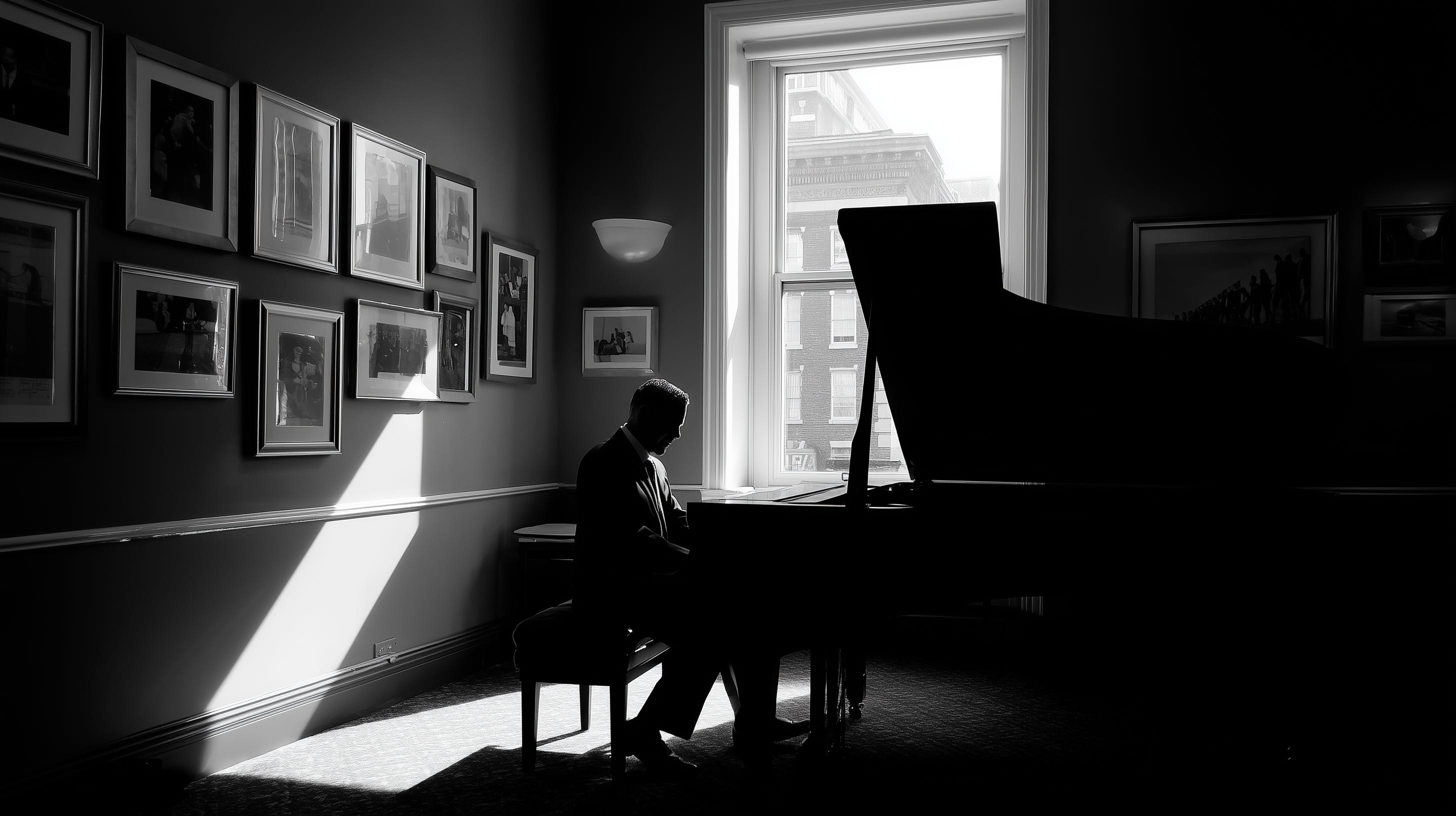
I spent years in practice rooms before I ever worked a pipeline.
Scales at 60 BPM. Long tones until my lungs burned. Etudes repeated until the fingerings became unconscious. Majoring in music as an undergrad at FSU meant internalizing a principle that most people find uncomfortable: mastery is boring, and boring is the point.
Musicians understand something salespeople resist. Preparation isn’t glamorous. It doesn’t photograph well. No one applauds scales. But when the lights come up and the pressure rises, you fall back on whatever you’ve actually trained—not whatever you intended to train.
Sales does not operate this way. And that gap costs more than most leaders realize.
The first time I watched a sales team “prepare” for a major presentation, I felt the dissonance physically.
They ran through the deck once. They talked about who would say what. Someone made a joke about winging the Q&A. Then they walked into a room with seven stakeholders and improvised their way through an hour that would determine a six-figure decision.
In music, we would call that a rehearsal disaster. You don’t walk on stage wondering what “good” sounds like. The tempo is marked. The dynamics are written. Every entrance is planned. Excellence is defined before the first note—not discovered in the middle of performance.
Sales often defines excellence retroactively. “That was a good call.” Why? “They seemed engaged.” Based on what? “It felt productive.” According to whom?
Vague standards create drift. When no one agrees on what success looks like in advance, everyone declares victory based on vibes.
Musicians don’t get that luxury. A wrong note is a wrong note. The feedback is immediate, specific, and public. You can’t explain away a cracked entrance with “the audience wasn’t really ready to hear that passage.”
Here’s what most sales teams get backwards: they learn live.
They develop skills on real calls, with real buyers, when real outcomes hang in the balance. Pipeline reviews become postmortems. Coaching happens after deals stall or die. The reps who improve fastest are the ones who fail publicly enough to get feedback—but by then, the damage is done.
Musicians don’t build technique on stage.
A concert lasts two hours. Preparation lasts years. The ratio matters. Professional musicians spend most of their time in rooms where no one is watching, working on fundamentals that look mundane from the outside. Repetition that serves no purpose except building reliability under pressure.
Sales inverts this ratio completely. The performance is the practice. And then we wonder why execution is inconsistent.
The hardest part of my transition from education to sales wasn’t learning new frameworks. It was accepting how little deliberate practice existed in a profession that calls itself “high performance.”
In music, feedback is a scalpel. Your teacher doesn’t say “nice job.” They say: “Tubas—in bar 47, the D was out of tune, and you rushed the dotted-eighth rhythm.” You know exactly what to fix and exactly where.
In sales, feedback is a fog machine. “Good energy on that call.” “I think they liked you.” “Pricing might have been an issue.” None of that builds skill. It just makes everyone feel like something happened.
High performers don’t want encouragement. They want accuracy. They want to know where the note went flat so they can fix it before the next performance.
That requires call recordings. Specific timestamps. Concrete observations rather than impressions. Most sales cultures resist this level of scrutiny because it feels harsh. But vague praise doesn’t develop anyone. It just protects egos while performance stagnates.
The musicians I trained with obsessed over fundamentals they learned as children.
Scales. Tone production. Breath support. Articulation. They never “graduated” from basics. They refined them endlessly, understanding that virtuosity is built on a foundation of boringly reliable technique.
Salespeople chase novelty instead. New decks. New frameworks. New messaging. New tools. There’s always something shinier than the fundamentals.
But most sales problems are not innovation problems. They are execution problems. Asking layered questions. Listening without planning your next sentence. Summarizing accurately. Advancing deals with discipline instead of hope.
These are the scales of selling. They don’t look impressive. They don’t feel exciting. They work.
I’ve watched senior reps dismiss this logic because they’ve “been doing this for twenty years.”
Experience is not the same as practice.
A musician who plays the same passages the same way for twenty years hasn’t improved—they’ve just calcified. Deliberate practice requires attention, adjustment, and discomfort. It means working on weaknesses, not just performing strengths.
The reps who plateau are usually the ones who stopped being students. They substituted familiarity for growth. They confused repetition with refinement.
Mastery isn’t a destination. It’s a discipline that never ends.
One more thing musicians understand that sales often forgets: every performance stands alone.
You don’t get credit for last night’s concert when tonight’s falls apart. The audience in front of you has no memory of your previous brilliance. They experience only what you deliver right now.
Buyers work the same way.
They don’t care about your quota history, your company’s reputation, or how hard you worked on the account. They care about this interaction. Every meeting resets the standard. Every call either reinforces trust or quietly erodes it.
There are no throwaway performances. There are only moments that compound—toward credibility or away from it.
I don’t think sales needs to become more artistic.
I think it needs to become more honest about what performance actually requires.
Clear standards, defined in advance. Deliberate practice, away from the stage. Specific feedback, delivered without apology. Relentless attention to fundamentals that never feel finished.
Musicians train this way because audiences are unforgiving. A trumpet player cracking a note in a Mahler symphony is what people remember, not the thousands of notes that went right.
Buyers are equally unforgiving. They just express it differently—by going quiet, going slow, or going with someone else.
Sales is already a performance profession. The discipline to train like one is the only variable left.
As someone who moved from the classroom into sales, this really hit home. Curious to hear your take on something, what do you think is the single most impactful “fundamental” a rep should practice daily if they want to raise their skill ceiling the fastest?